Lorem Ipsum is simply dummy text of the printing and typesetting industry. Lorem Ipsum has been the industry's standard dummy text ever since the 1500s, when an unknown printer took a galley of type and scrambled it to make a type specimen book.
The latest Android news, developments, comments and apps involving Google's embedded mobile platform that now features in smartphones, tablets, set-top boxes, cameras, watches and some other rather unexpected places.
Samsung has announced a tablet aimed at business use – “built for business,” it says – at IFA 2014 in Berlin. It’s the ruggedized Galaxy Tab Active. How does it differ from all other Android tablets, I wondered? As you would expect, mention of Knox is prominent – Samsung’s system for managing secure corporate data access, which is built on Security Enhanced (SE) Android. The extra security, says the company, “keeps applications and data safe in a professional’s own secure space without the need for a third-party platform and extra cost”. Anything else? Its anti-shock covering can withstand a 1.2-meter drop, with the protective cover on, and it is water and dust resistant with IP67 certification. The remaining highlighted features are also really about durability, for people out in the field rather than in the office, with robust “C-Pen” and a detachable battery for (relatively) uninterrupted working. Also: The 3.1MP Auto Focus Camera can easily scan barcodes, and the Galaxy Tab Active’s NFC technology saves time on communications and work process management. These essential features can greatly boost productivity, such as with a transportation and logistics managers who can leverage the Galaxy Tab Active to seamlessly connect with a building’s foreman on shipping and receiving. With an 8” WXGA(1280 x 800) TFT LCD display, it runs Android Kitkat (4.4) on a 1.2 GHz Quad-Core Processor, with 16GB of internal memory, and support for MicroSD up to 64GB. The full spec is below.
3.1MP Auto Focus (Rear) with Flash + 1.2MP (Front)
Video
MP4, 3GP, WMV, ASF, AVI, FLV, MKV, WEBM Recording : HD (1280 x 720) @ 30fps Playback: FHD(1920 x 1080) @ 30fps
Audio
MP3, M4A, 3GA, AAC, OGG, WAV, WMA, FLAC
Content Services / Applications
Smart Tutor (Remote Customer Support Service), Ultra power saving mode
Free Downloadable apps
ChatON, Flipboard, Group Play, S Translator, Samsung Link, Story Album, TripAdvisor, Businessweek+, Side Sync, Barcode Scanner, Hanshow, Hancell, Hanwrite
Google Mobile Services
Chrome, Drive, Gmail, Google, Google Settings, Google+, Hangouts, Maps, Photos, Play Books, Play Games, Play Movies & TV, Play Music, Play NewsStand, Play Store, Voice Search, YouTube
Connectivity
USB 2.0 High Speed , BT 4.0 BLE, WiFi 802.11 a/b/g/n, NFC
GPS
GPS , GLONASS
Sensor
Accelerometer sensor, Light sensor
Memory
1.5GB LPDDR3 + 16GB internal memory MicroSD up to 64GB
Dimension / Weight
126.2 x 213.1 x 9.75mm / 393g
Battery
4,450mAh (User-replaceable)
- See more at: http://www.electronicsweekly.com/eyes-on-android/tablets/samsung-makes-business-case-galaxy-tab-active-2014-09/#sthash.JLpUCGXM.dpuf
By Ehijoshua (Jboss) →
Thursday, 18 September 2014
LG’s Android Wear-based G Watch priced at £180 for UK no comment Alun Williams 9th April 2014 Get news by email LG G Watch LG’s Android Wear-based G Watch LG is to charge £180 in the UK for its first Android-powered smartwatch, the G Watch, and the device will go on sale in July, reports the Daily Telegraph. The announcement was apparently made at the company’s UK showcase in Weybridge, and is the first indication of UK pricing for the Android Wear technology. Matt Warman writes: It indicates that Google will target a much lower price point for its wearable devices that companies such as Samsung have previously aimed at with their Gear smartwatches. LG also revealed a non-functioning demonstration unit, showing a rectangular watch face with no buttons and a plastic strap, in line with their previous mock-ups. It contrasts with the round Android Wear device shown by Motorola when Google announced the software earlier this year. - See more at: http://www.electronicsweekly.com/eyes-on-android/android-wear/lg-g-watch-android-wear-in-uk-2014-04/#sthash.BQxrbHuA.dpuf
What you need to know about the future of paying for stuff
We've virtualized much of the rest of the modern life -- why not payments? Plane tickets, banking and many other aspects of our lives now live on our phones. Payments still exist in the world of paper and plastic. Google has Google Wallet; Visa has payWave; MasterCard has PayPass; and American Express has ExpressPay. Apple just announced its own, with Apple Pay. If you've heard of any of these credit card services other than Apple's recently announced system and maybe Google's long-running program, we're impressed. You're in the minority; heck, one quarter of US citizens don't even own a standard credit card, let alone a virtualized one. But virtual payments are more prevalent by the year, and Apple Pay is giving the concept a much-needed publicity boost. So, all that said, let's talk about the future of payment. Don't throw away your wallet just yet.
WHAT IS IT?
When it comes to virtualized payment systems, we're not talking about paying with your credit card number online, or even services like PayPal. We're talking about the act of paying at a physical store with virtual means: your phone, for instance, or some forms of credit card. Perhaps you've got a special key for use at the gas pump, where you wave it near a part of the pump and you're good to go? Same concept, except this is all payment scenarios (at major retail chains, anyway). Google and Apple are using NFC -- "Near-Field Communication" -- to make this work. That means exactly what it sounds like: You put your phone or card near a reader and the reader accepts payment. We've got a video of Apple Pay in action right here! Pretty simple, right? What's actually going on behind the scenes is a bit more complex, of course, but the implementation is meant to be painless. Ideally, even more painless than pulling out your credit card. And more secure, too.
HOW DOES IT WORK?
Here's where things get technical, so bear with us for a moment. There are two main standards being used: NFC and ISO/IEC 14443. We already know that NFC stands for "Near-Field Communication," but it's worth also knowing that NFC devices produce a very weak radio frequency. This radio frequency is what allows them to communicate with payment systems, and it's that same radio frequency that the ISO/IEC 14443 uses: 13.56MHz. Technical junk aside, what matters here is that both systems play nice with each other. And that's good, because a variety of credit card companies use the non-NFC system. Since those companies already outfitted retailers with their systems, no major change needs to be made for NFC-enabled phones to simply work as payment all over the USA. The list of vendors signed up for Apple Pay thus far is testament to that: Bloomingdale's, Disney Store and Walt Disney World Resort, Duane Reade, Macy's, McDonald's, Sephora, Staples, Subway, Walgreens and Whole Foods Market.
Google Wallet similarly offers a stand-in for credit and debit cards; enter debit/credit information into the app, and then use the phone as your payment device at participating retailers. And all those retailers where Apple Pay works? Google Wallet now works there too, thanks to the fact that there are established standards for how these payment systems work, and those standards aren't governed by a single company.
IS IT SECURE?
As you likely expect, this is a sticky situation. Let's break it down, piece by piece:
Do Google and Apple keep my credit card information? The short answer is no. The longer answer still starts with no, but also points out that your debit/credit information is probably on file with both companies anyway through Google Play and iTunes. There's no reason to believe that either company can't be trusted with keeping that data safe, but Target customers and PlayStation Network users may feel differently.
Could my phone be stolen and used as payment? Also no, at least not easily. In the case of Apple Pay, you need a fingerprint ID to use it. In the case of Google Pay, a PIN is required.
Could my phone be stolen and debit/credit card info removed? Still no. Part of NFC's standardization is an aspect called the "secure element." This is the chip where personal information is stored, securely and encrypted.
The question that really matters here is one of comparative security. Is virtualized payment more secure than traditional means? We'd argue yes, it is. Retailers in the US rarely check identification for debit/credit card use, and matching signatures is a remnant of the past. There are inconveniences that come with the new method -- the inability to lend a family member a credit card, for instance -- but those issues will assuredly work out in time.
WHAT ARE THE ALTERNATIVES?
Much of the world outside of the US has adopted a newer form of credit card that uses a built-in microchip and a PIN (sometimes called "Chip and PIN technology"). This "smartcard" has vastly reduced card fraud, but it never caught on in the US. It's certainly an alternative, but not one that's very effective if you don't live in Europe. Smartphones, however, are worldwide. A similar concept exists in the US, though it uses technology similar to NFC. It's this technology, in fact, that led the charge for virtualized payment in retail stores. It's no surprise that Visa, MasterCard, American Express and a mess of major US banks are on board with the new NFC tech from the likes of Apple and Google -- it's an evolution of technology they're already using.
One of the biggest new features of Apple's latest mobile operating system iOS 8 is HealthKit platform, the company's first major step into the health and fitness space. While the company has been calling on developers to connect their apps and its data to its hub, you can't download any HealthKit-enabled apps from the Apple App Store just yet. Apple told Mashable in a statement Wednesday that the company detected a bug in the platform and it's not ready for launch.
"We’re working quickly to have the bug fixed in a software update and have HealthKit apps available by the end of the month,” a spokesperson said. The possibility of a delay first surfaced on Twitter, when Brian Mueller — a developer for the fitness motivation app Carrot Fit — said in a tweet that he received a call from Apple about the state of his app, noting it wouldn't be available for download because "HealthKit is just broken and isn't ready to launch." "Sounds like HealthKit won't be working at all this week," Mueller added, according to Apple Insider. "And there's no ETA for when a bug fix will go live." He has since deleted the tweets. In addition to relying on developers to build apps for HealthKit, the company is reportedly working with healthcare providers at Mount Sinai Hospital, the Cleveland Clinic, Johns Hopkins University and electronics health records provider AllScripts, too. The news comes as Apple launched iOS 8 on Wednesday, a download that required up to 5.7GB of free storage space. As a result, people are scrambling to delete pictures, apps and music in order to make room for iOS. If you're looking to make the upgrade and don't want to delete anything, click here for tips on how to do so. Have something to add to this story? Share it in the comments.
By Ehijoshua (Jboss) →
Wednesday, 17 September 2014
iPhone 6 release date, news and features
Updated Everything you need to know about the new iPhone 6 Apple has officially announced the iPhone 6 - the eighth generation of iPhone - at a special event in Cupertino. As well as the iPhone 6 and iPhone 6 Plus, Tim Cook has also treated us to the Watch. If you want to get a feel for the handset, head on over to our hands on iPhone 6 review, and keep an eye out for our iPhone 6 Plus and Watch early reviews.
The competition has never been tougher for a new iPhone, with the HTC One M8, Samsung Galaxy S5, LG G3 and Sony Xperia Z3 surpassing the iPhone 5S in terms of size, specs, power and performance. Apple needs to pull something very special out of the bag to keep itself relevant, so what does the iPhone 6 bring? We've got all the latest details on Apple's new iPhone right here, just for you. Check out the new iPhone 6 in our hands on video direct from Apple's event:
Cut to the chase
What is it? A major revision of the iPhone including entire design
When is it out? iPhone 6 release date is September 19
What will it cost? From $649, £539, AU$869 SIM-free
iPhone 6 release date
You'll want to know when you'll be able to get your sweaty mitts on the iPhone 6. The good news is you won't have to wait long, with the iPhone 6 release date set for September 19. (That's a Friday).
Bigger than 5S, smaller than 6 Plus
iPhone 6 price
In the US, on a two year contract the iPhone 6 starts at $199 for the 16GB model, then it's $299 for 64GB and $399 up front for 128GB of internal storage. If you're looking for a SIM-free iPhone 6 you'll need to have a lot of money at the ready. The 16GB iPhone 6 will set you back $649, £539, AU$869, the 64GB model is $749, £619, AU$999, while the 128GB version is a whopping $849, £699, AU$1129 SIM-free. Pre-orders opened on September 12, but demand has been predictably high and Apple warns that even if you pre-order you might not get your iPhone 6 until October.
iPhone 6 design
This is the first of two major revisions for the new iPhone flagship - Apple has overhauled the squared off design which has been with us since the iPhone 4, with the iPhone 6 sporting a more rounded, slimmer body. In fact it's just 6.9mm thin, making it one of the slimmest smartphones on the market, and rumors about a protruding rear camera lens are also true. It's slightly heavier than the 5S at 129g, while the body measures 138.1mm x 67mm. The power/lock key has been moved from the top of the handset to the right hand side, making it easier to hit during one handed use. On the left hand side you get the separated volume keys below a mute toggle switch.
It's thin. Really thin.The shell is metal and and the screen subtly curves into it, to create a sense of unity with minimal visible gaps in the construction.
iPhone 6 display
The iPhone 6 has a 4.7-inch LED back-lit display with a 1334 x 750 resolution - it's Apple's new "Retina HD" offering. That means you get a pixel density of 326ppi - the same as the iPhone 5S. It also pales in comparison to the iPhone 6 Plus, with a full HD 1920 x 1080 5.5-inch screen with a 401ppi display. But while the pixel density might not have changed the iPhone 6 delivers higher contrast and wider viewing angles than the iPhone 5S and it even features an improved polariser, so that colours look more natural when you use it while wearing sunglasses.
iPhone 6 power
The iPhone 6 packs in an A8, 64-bit second generation processor and a next-generation M8 motion coprocessor too. We're also hearing that the iPhone 6 sticks with 1GB of RAM and has a 1.4GHz dual-core processor, compared to the 1.3GHz dual-core iPhone 5S. That might not sound like much of an upgrade, but Apple promises that the iPhone 6's CPU and graphical performance are faster than last year's handset even while powering a larger display. The A8 chip is also up to 50 percent more energy efficient than the A7 and Apple has included a new technology called 'Metal', which is designed to allow the CPU and GPU to work together to deliver enhanced effects and more detailed graphics than past iPhone's have been capable of, so we're likely to see even more impressive games hit the App Store in future. Moving on to the M8 motion coprocessor, this is a lot like the M7 version found in the iPhone 5S, except that it can now track steps, distance travelled and elevation changes, so it's better than ever at monitoring your activity. In combination with the new Health app this should be appealing for fitness fans.
iPhone 6 camera
Apple has stuck with the 8MP rear camera on the iPhone 6, but it's not the same as the one you'll find on the iPhone 5S. A new wide angle iSight lens, true tone flash, f/2.2 aperture, greater noise reduction, digital image stabilisation and a 2 x faster autofocus provide even better images. There's also a new Apple-design image signal processor built into the A8 chip to improve the way the iPhone 6 handles images.
Why photographers should be excited about the iPhone 6 iSight camera
That rear camera can shoot 1080p video (sorry 4K fans), and the Slo-mo video mode has been boosted to give you the option to record in either 120 fps or 240 fps. Videos also benefit from continuous autofocus, plus Apple has added a new time-lapse mode to the mix. The front facing FaceTime camera has also been given some love. It's actually a FaceTime HD camera now, with a f/2.2 aperture, and a new sensor which allows in up to 81% more light. There's also HDR FaceTime video support, ensuring you're perfectly lit. Selfies get a boost too, as there's now a Burst Mode which can capture ten shots per second. That along with Timer Mode and improved face detection should make it a breeze to take the perfect mug shot.
It has a camera!
iPhone 6 battery
With a 50% more efficient processor along with presumably a bigger battery we're hopeful that the iPhone 6 will have a lot of juice. Apple hasn't revealed the exact battery size but it claims that the iPhone 6 can keep going for up to 250 hours on standby, 12 hours of talk time, 11 hours of internet use or 50 hours of audio playback, which sounds like a modest upgrade over the iPhone 5S.
iPhone 6 connectivity
The iPhone 6 (and 6 Plus) sports CAT 4 LTE, offering data speeds of up to 150Mbps and it supports LTE coverage for 20 bands, covering over 200 networks worldwide. The most bands covered by any iPhone.
iPhone 6 operating system
There are no prizes for guessing the software that's running on the iPhone 6. Apple's latest platform offering, iOS 8, was announced at its WWDC developers conference earlier this year and it's on the new iPhone 6 and iPhone 6 Plus. This isn't a total overhaul, but it does add some useful new features and improvements. For example it includes third-party keyboard support, improved OS X integration, more interactive notifications, a new Health app and the ability for third-party apps to use Touch ID.
iPhone 6 Apple Pay
The iPhone 6 largely seems focused on changing and improving what's already there, but Apple Pay is a genuinely new feature. Essentially it uses the iPhone 6's new NFC chip to allow you to make contactless payments. This isn't a new idea but now that Apple's getting into the game it might finally start to take off, especially as the company has already partnered with Visa, MasterCard and American Express. Don't get too excited about NFC though as for the time being the chip in the iPhone 6 only works with Apple Pay.
If you love the idea of starting your own blog but feel overwhelmed at the thought of setting your blog up, or are wondering what to write about, how to find content or whether you’ll make any money, then this course is for you.
Drawing from my own experience as a successful home based entrepreneur and “mum blogger”, I’ve created this for you
Blogger is a Robust and an amazing product that has sprung up to be an open source CMS System. There are so many people and corporate companies who are earning more than decent amount from this simple and modest blogging platform called Blogger. There are a lot of ways through which you can use Blogger to make a decent amount of revenue, including some real interesting ones. This platform is something that could accommodate anything you just name it, and this platform certainly has it. Therefore, in this article, we will show you how you can Make Money with Blogger Platform.
Sell Templates:
Selling Blogger Templates is probably the best way that people thinks when they are taking Blogger commercially. There are hundreds and thousands of well-known companies who are just earning for their living by selling Templates online. It works pretty much like an online marketplace where people can buy and sell templates.
You can also try your luck on Themeforest.net by selling your templates through their marketplace. However, before you can start selling templates, you have to pass their quick test for FREE Developer membership. If you are crazy about HTML and CSS developer, then you have the chance of generating some decent money by selling blogger templates online.
Sell Widgets and Plugins:
You can develop attractive and useful plugins and can sell them on different marketplaces like Codecanyon. The concept of your widgets should be concise and attractive because people will only purchase Paid widgets if they are certainly impressive.
Otherwise, blogger has an enormous inventory of FREE widgets. People will not buy your plugins until they are of sheer quality. It is perfect if you are a skillful coder, who may not have template developing skills, but can put up a decent widget. Try your luck may be someday you could also work with Google.
Custom Design Development:
If you are a web developer and designer, then Blogger could prove to be a money making machine for you. You can offer custom template development services and can engage few clients to start off your career in custom development. We are also offering custom template development for blogger at Templateism.com.
Create a Resource Websites:
Just like MyBloggerLab, you can also start a resource site based on Blogger where you can share tips, tricks and hacks related to the BlogSpot platform. You need to provide quality based tutorials otherwise there are a lot of competitors in this niche.
You need to be unique to survive otherwise tons of websites are just doing the same. Your content is the main thing you need to cook amazing content to impress your guest aka visitors.
Content Website:
Since, Blogger is flexible and free so why not to start a website based on a certain topic. Write some glorious content within your niche. Once, traffic starts flourishing you can monetize it with affiliates or other advertising platforms like Google AdSense, BuySellads, Infolinks and etc. it requires dedication and lots of patience, but the prize is pretty remarkable.
Provide Consulting:
Advise companies and clients on how they can maximize their earning potentials using Blogger platform. You can provide them consultation about a specific topic. It could be related to anything like affiliate marketing, Search engine optimization, Blogging and even Blogger. You can even give them advises through Skype call service.
Conclusion:
The methods, which we have mentioned above, are just few ways of making with Blogger. In reality, there are so many ways through which blogger can be used for earning handsome amount of revenue. Everything depends on your thinking and uniqueness because you everyone has the ability to come up with something unique. Let us know what you think about this article? If you have better ways of making money online With Blogger then, do share it with us by commenting them below. If this guide helped anyone, then do share it on Facebook, Twitter and more.




 Posts
Posts






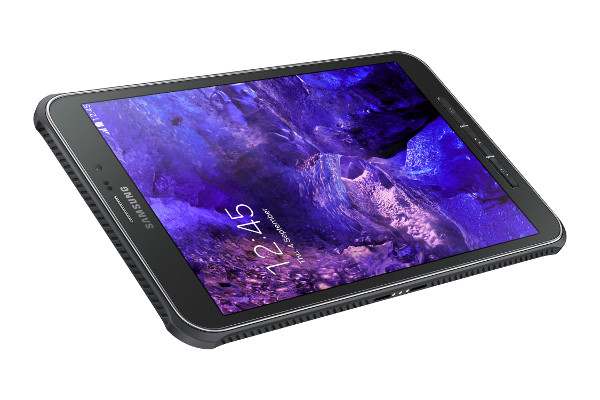 Samsung has announced a tablet aimed at business use – “built for business,” it says – at IFA 2014 in Berlin. It’s the ruggedized Galaxy Tab Active.


