

AD Banner

Featured

3/featured/recent

footer about

Videos

6/cate2/videos
Adv (300 x 250)

Find us on Facebook

5/cate3/lifestyle

Advertisement

6/breakingnews/random

Instagram posts

About us

3/cate1/entertainment

Recent Comments

Lorem Ipsum is simply dummy text of the printing and typesetting industry. Lorem Ipsum has been the industry's standard dummy text ever since the 1500s, when an unknown printer took a galley of type and scrambled it to make a type specimen book.
Copyright ©2019 by Mogtemplates

contact form

Name

Email *

Message *

Other News

[Related][recentmag]

EHI ONLINE LESSONS

EHI ONLINE LESSONS

Powered by Blogger.

Random Posts

World News

[World News][recentmag]
featured

Header Ads

Total Pageviews

Search This Blog

Search This Blog

Latest

Brexit

Brexit

Football

Football

Random posts

5/cate4/random

Random Post

Adv (880 x 120)

News By Picture

pictures

Hot News

5/cate3/hottrend
Adv (880 x 120)

Labels

Hot News

[Hot News][recentmag]

Labels Cloud

Get In Touch
Footer Logo

Trending Posts Display

Labels List

Home Layout Display

Posts Title Display

Theme Layout

Theme Translation

Tech

tech

Games

games

Popular Posts

127 Likes
3,240 Followers
12.7k Subscribers
136 Followers

Pages

Recent Comments

How accessories make you a better lover. 18 ways devices are completely overrated. Operating systems in 12 easy steps.

Recent Posts

Adv (300 x 250)

Popular Posts

Trending Posts

Browsing "Older Posts"

Android reversible debugging software licensed for customer sites

Android green robotAvailable on Linux and Android (for Native development), UndoDB allows developers to record their program’s execution and then rewind and replay their C/C++ code in real-time, to help find bugs more quickly.
Why do I mention this? The company has announced a new way of licensing its reversible debugging software, called “UndoDB Out-and-About”.
The idea is to help “track down software failures, such as intermittent issues and memory corruption errors, directly at the customer site.”
“Software vendors operate in a complex development ecosystem, and it is imperative that they work closely with their customers to ensure software is meeting the highest quality standards in the field,” said Greg Law, CEO and co-founder, Undo Software.
“By extending the power of reversible debugging to customer sites with UndoDB Out-and-About, vendors can find and fix customer-critical bugs faster, protecting client relationships while increasing productivity.”
- See more at: http://www.electronicsweekly.com/eyes-on-android/programming/android-reversible-debugging-software-licensed-customer-sites-2014-08/#sthash.72MkSf7T.dpuf

How to Make How to Make Money Selling Ringtones By Ronald Kimmons, eHow Contributor  Share  Tweet  Share  Pin How to Make Money Selling Ringtones thumbnail Many cell phone owners seek to personalize their phones with select ringtones. Cell phones and other handheld devices are becoming more prevalent in our society, and the people who own and use them often try to look for ways to personalize them. Some people buy personalized cell phone covers, while others pay to use specific songs and tunes as their ringtones. Some people even get multiple ringtones that they use simultaneously on the same phone, each signifying a specific caller. With your own website, you can make money by selling such ringtones online. Other People Are Reading How to Create High-Quality Ringtones How to Sell Ringtones Online Things You'll Need $500 (estimation) Instructions 1 Get a website. Do this by buying services from a web hosting company such as Blue Host, iPage or Fat Cow. Whatever service you pick, make sure that it is one that allows you to have unlimited traffic. In choosing a domain name, pick something that will appeal to a specific group of consumers. 2 Open a PayPal account for your website to pay into. PayPal offers services specifically tailored to suit the needs of Internet businesspeople. Sponsored Links Advertising On Google Show Up When Your Customers Search. Learn More About Google Ads Today. www.google.com.my 3 Become an affiliate with a content service. It would be basically impossible for you to directly sell copyrighted ringtones on your own, as the publishers do not freely license third parties to sell their songs. This content service will give you a percentage of every ringtone sold through your website. 4 Pick songs that appeal to the same consumer group that you were aiming to target when you chose your domain name. For instance, if you are targeting teenage girls, pick songs that teenage girls tend to like. If you are targeting snowboarders, pick songs that snowboarders enjoy. 5 Start an advertising program. The simplest way of doing this is going through a pay-per-click service, such as those offered by Google and Yahoo. Many web hosting companies will give you free points for Google and/or Yahoo advertising. Put a few hundred dollars more into the advertising program on top of this. Another way of increasing traffic to your site is by going to Internet communities or blogs that appeal to your consumer base and posting links. 6 Continue updating your site. Post new songs, pictures and written content regularly, and find other things to sell as well. This will keep your visitors coming back. Read more : http://www.ehow.com/how_6748532_make-money-selling-ringtones.htmlMoney Selling Ringtones

By Ehijoshua (Jboss) → Sunday, 21 September 2014

Picking a new iPhone: there's only one decision that matters

It's simpler than you think


Starting at 12:01AM PT (3:01AM ET), you'll be able to preorder the just-announced iPhone 6 and iPhone 6 Plus from Apple. If history serves any indication, hundreds of thousands, if not millions, of people will place their preorders this weekend, consuming all of Apple's stock and pushing availability of the devices out for weeks or months.
That's been the same story every year for half a decade, but this time around, Apple is selling two distinctly different iPhones with different sets of features, different price points, and seemingly different cameras. That makes it a little harder to wake up in the wee hours of the morning and just click the buy button like you could in prior years. Based on talking to people in person and on social media networks, it seems that a lot of people are torn between the iPhone 6 and the iPhone 6 Plus and are completely unsure of which one to buy. It appears that for most people, the biggest sticking point is that the 6 Plus could take better photos than its smaller sibling, thanks to its new optical image stabilization system. But the answer is simpler than many people are making it out to be.
The differences between the two devices have been agonized over ad nauseam for the past couple of days, but here are the highlights: the iPhone 6 has a 4.7-inch, 1334 x 750 pixel display, while the iPhone 6 Plus has a 5.5-inch, 1920 x 1080 pixel display. The iPhone 6 Plus comes with optical image stabilization (OIS) on its 8-megapixel camera, while the smaller iPhone 6 does not have that feature. And the iPhone 6 Plus has a bigger battery. Apple has also tweaked iOS 8 for the 6 Plus' larger screen with a new landscape homescreen mode.
Both screens are considered Retina HD by Apple, and though the 6 Plus has a higher resolution, both are pixel dense enough to make it difficult to see individual pixels with the naked eye. Unsurprisingly, the 6 Plus is much larger than the 6, measuring 3.06 inches wide by 6.22 inches tall verses 2.64 inches wide by 5.44 inches tall. (If you've ever held one of Samsung's Galaxy Note 3s, the 6 Plus has nearly the exact same dimensions as that.)
According to Apple, the 6 Plus' larger battery will last for 12 hours browsing the web over LTE or up to 16 days of standby. The iPhone 6 is rated for 10 hours of LTE web browsing or 10 days of standby.
Until we have been able to put the iPhone 6 and iPhone 6 Plus through our review process, we won't know for sure how much of a difference the 6 Plus' longer battery life makes in the real world (though Apple's suggested guidelines have been reliable in the past). But it's safe to say that the iPhone 6 Plus will last longer between charges than the iPhone 6, and if battery is your number one concern, that might push the 6 Plus ahead regardless of the other differences. For the rest of us, that leaves the actual size of the devices and the OIS feature as the remaining factors.

To understand how important (or not) OIS is in a phone, it's important to understand how it actually works and what it actually does. OIS has been around in DSLR lenses and point-and-shoot cameras for over a decade, and other smartphone manufacturers have been putting it in their devices for years before Apple jumped on board. It is designed to counteract hand-shake and camera movement, by literally moving elements of the camera's lens in the opposite directions of the photographer's movements. This allows for taking sharp pictures with longer shutter speeds than would otherwise be possible. Longer shutter speeds let more light into the camera's sensor, allowing for brighter pictures in low light environments. It's long been billed as the savior for low light photography and it lets you use a really big zoom lens on your DSLR or mirrorless camera without a tripod. OIS is most effective when you have a long focal length, because that magnifies any uncontrollable movements you might have.
OIS only corrects for camera shake, it does not make your subject sit still
But, and here's the key misunderstanding with OIS, it is only able to correct for movement on the camera's side. If you have a longer shutter speed, unless your subject is inanimate and perfectly still, it's more likely that your subject will move in the time that the camera is taking the picture, causing motion blur that the OIS system can do nothing to correct for. You've seen this before, often times when you try to take a picture of a frisky pet or active toddler indoors, they move during the shot, causing a blurry limb or loss of sharpness in key areas such as the face. Having OIS in a camera does not resolve this problem, and in fact, a lot of smartphone manufacturers have exacerbated the issue by relying too heavily on the feature and holding the shutter open for longer than would otherwise be necessary. (I've personally seen this with every smartphone I've reviewed that has OIS, including models from HTC, LG, and Nokia.) And since smartphones have wide lenses, OIS is less effective than it would be on your DSLR with a 300mm zoom lens.
The fact is, most of the pictures people take with smartphones are of other people, which are living, breathing, and yes, moving subjects. The most important factor in getting sharp pictures of people is shutter speed — it needs to be fast enough to freeze the subject.
That isn't to say the OIS feature has no purpose — it's really great for getting sharp pictures of buildings at night or those cool nighttime cityscapes. They aren't moving and will surely sit still long enough for the camera to use a longer shutter speed. OIS can also be effective for stabilizing video. It can also be argued that OIS is more effective in the iPhone 6 Plus (and possibly more necessary) than it would be in the iPhone 6 because its larger size can be more difficult to hold steady.
In Apple's description of the OIS system on the iPhone 6 Plus, it says that it is capable of fusing both long and short exposures in the same shot in an effort "to reduce subject motion." Earlier iPhones, like the 5S (and also the iPhone 6), combined four short exposures to fight handshake and subject motion. The extra step the iPhone 6 Plus does is add the long exposure, but we won't know exactly how much of a difference that makes in real-world practice until we're able to put the phones through our review process. It's possible that the iPhone 6 Plus' system of fusing exposures could alleviate the issues we've seen with OIS in other smartphones that do not do the same kind of processing.
By all accounts, it appears that everything else about the cameras in the iPhone 6 and 6 Plus are the same. According to Apple, they have the same resolution, same sensors, same focus system, same lens, same flash, and same new camera processing features. They also have the same video recording features, including slow-motion, 1080p recording, and something Apple calls "Cinematic Stabilization." But in the vast majority of still photography situations, these cameras are likely to produce very similar results.
iPhone 6 colors
So the real question you need to answer before clicking that buy button is "Do I want a really big phone or not?" The iPhone 6 Plus is a really big phone. It's going to be awesome for watching video, browsing pictures, reading books and comics, browsing the web, and all of the other things that people have been doing on really big phones for years. It will likely take the place of a small tablet for many people. But it doesn't do that without compromises. Just like any other big phone, the iPhone 6 Plus is going to be difficult to use in one hand (even with Apple's software tweaks) and it's not going to slide into your pocket nearly as easily as a smaller phone. Though the iPhone 6 has a considerably larger display than the 5S before it, we've seen that 4.7-inch phones can certainly be used in one hand and they fit in any pocket you wish to put them in. A simple test to see if this works for you is to print out pieces of paper in the dimensions of the iPhone 6 and 6 Plus and try them out in your hands and in your pockets. Here are handy templates for the iPhone 6 Plus and iPhone 6 (make sure you set your printer to A4 before printing).
Do you want a really big phone and are you willing to live with the compromises that come with it? Great, you should get the iPhone 6 Plus. If you want a phone that will be easier to manage in one hand and will fit in your pants' pockets with ease, the iPhone 6 offers virtually everything the 6 Plus has in a smaller package.
It's as simple as that. Now comes the really hard question: what color do you want?
Update 9/12/2014, 3:30PM ET: This article has been amended to include a description of how the OIS system works in the iPhone 6 Plus, according to Apple.

Picking a new iPhone: there's only one decision that matters

By Ehijoshua (Jboss) → Thursday, 18 September 2014

Apple is hiding an embarrassing iPhone 6 camera bulge


Apple has an unpleasant bulge it's hiding. The latest iPhone 6 has slimmed down to just 6.9mm of metal in what Apple describes as a "streamlined profile," but it has picked up one element that isn’t particularly streamlined: an ugly camera bulge at the rear. You wouldn’t necessarily spot it if you were browsing Apple’s website though. While some images display the bulge clearly, there’s a number where it has simply vanished from sight.


It could be clever lighting, placement, and website trickery, but ultimately it looks like the camera bulge has simply been sliced from view on most profile shots of the phone. Even Apple’s own official iPhone 6 press images have been altered. We get it, nobody wants unsightly bulges, least of all Apple’s latest iPhone 6 smartphone, but it shouldn’t just vanish into thin air. You can view all of Apple’s attempts to hide its iPhone 6 bulge in the gallery below.

Apple is hiding an embarrassing iPhone 6 camera bulge

By Ehijoshua (Jboss) →


graphic-top-blogs
The latest Android news, developments, comments and apps involving Google's embedded mobile platform that now features in smartphones, tablets, set-top boxes, cameras, watches and some other rather unexpected places.

Samsung makes business case for Galaxy Tab Active

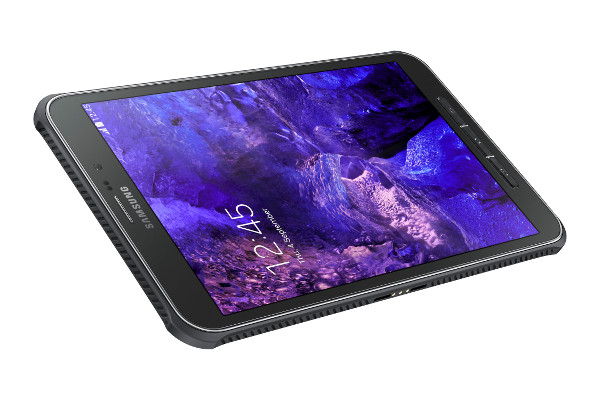
Galaxy Tab Active_11Samsung has announced a tablet aimed at business use – “built for business,” it says – at IFA 2014 in Berlin. It’s the ruggedized Galaxy Tab Active.
How does it differ from all other Android tablets, I wondered?
As you would expect, mention of Knox is prominent – Samsung’s system for managing secure corporate data access, which is built on Security Enhanced (SE) Android.
The extra security, says the company, “keeps applications and data safe in a professional’s own secure space without the need for a third-party platform and extra cost”.
Anything else?
Its anti-shock covering can withstand a 1.2-meter drop, with the protective cover on, and it is water and dust resistant with IP67 certification.
The remaining highlighted features are also really about durability, for people out in the field rather than in the office, with robust “C-Pen” and a detachable battery for (relatively) uninterrupted working. Also:
The 3.1MP Auto Focus Camera can easily scan barcodes, and the Galaxy Tab Active’s NFC technology saves time on communications and work process management. These essential features can greatly boost productivity, such as with a transportation and logistics managers who can leverage the Galaxy Tab Active to seamlessly connect with a building’s foreman on shipping and receiving.
With an 8” WXGA(1280 x 800) TFT LCD display, it runs Android Kitkat (4.4) on a 1.2 GHz Quad-Core Processor, with 16GB of internal memory, and support for MicroSD up to 64GB.
The full spec is below. 
Category
Specifications
Network
LTE : 800/850/900/1800/2100/2600
3G : 850/900/1900/2100
2G : 850/900/1800/1900
Processor
1.2 GHz Quad-Core Processor
Display
8” WXGA(1280 x 800) TFT LCD
OS
Android Kitkat (4.4)
Camera / Flash
3.1MP Auto Focus (Rear) with Flash + 1.2MP (Front)
Video
MP4, 3GP, WMV, ASF, AVI, FLV, MKV, WEBM
Recording : HD (1280 x 720) @ 30fps
Playback: FHD(1920 x 1080) @ 30fps
Audio
MP3, M4A, 3GA, AAC, OGG, WAV, WMA, FLAC
Content Services / Applications
Smart Tutor (Remote Customer Support Service), Ultra power saving mode
Free Downloadable apps
ChatON, Flipboard, Group Play, S Translator, Samsung Link, Story Album, TripAdvisor, Businessweek+, Side Sync, Barcode Scanner, Hanshow, Hancell, Hanwrite
Google Mobile Services
Chrome, Drive, Gmail, Google, Google Settings, Google+, Hangouts, Maps, Photos, Play Books, Play Games, Play Movies & TV, Play Music, Play NewsStand, Play Store, Voice Search, YouTube
Connectivity
USB 2.0 High Speed , BT 4.0 BLE, WiFi 802.11 a/b/g/n, NFC
GPS
GPS , GLONASS
Sensor
Accelerometer sensor, Light sensor
Memory
1.5GB LPDDR3 + 16GB internal memory
MicroSD up to 64GB
Dimension / Weight
126.2 x 213.1 x 9.75mm / 393g
Battery
4,450mAh (User-replaceable)
Galaxy Tab Active_10_m
- See more at: http://www.electronicsweekly.com/eyes-on-android/tablets/samsung-makes-business-case-galaxy-tab-active-2014-09/#sthash.JLpUCGXM.dpuf
By Ehijoshua (Jboss) →
LG’s Android Wear-based G Watch priced at £180 for UK no comment Alun Williams 9th April 2014 Get news by email LG G Watch LG’s Android Wear-based G Watch LG is to charge £180 in the UK for its first Android-powered smartwatch, the G Watch, and the device will go on sale in July, reports the Daily Telegraph. The announcement was apparently made at the company’s UK showcase in Weybridge, and is the first indication of UK pricing for the Android Wear technology. Matt Warman writes: It indicates that Google will target a much lower price point for its wearable devices that companies such as Samsung have previously aimed at with their Gear smartwatches. LG also revealed a non-functioning demonstration unit, showing a rectangular watch face with no buttons and a plastic strap, in line with their previous mock-ups. It contrasts with the round Android Wear device shown by Motorola when Google announced the software earlier this year. - See more at: http://www.electronicsweekly.com/eyes-on-android/android-wear/lg-g-watch-android-wear-in-uk-2014-04/#sthash.BQxrbHuA.dpuf

Samsung makes business case for Galaxy Tab Active

By Ehijoshua (Jboss) →


What you need to know about the future of paying for stuff

We've virtualized much of the rest of the modern life -- why not payments? Plane tickets, banking and many other aspects of our lives now live on our phones. Payments still exist in the world of paper and plastic.
Google has Google Wallet; Visa has payWave; MasterCard has PayPass; and American Express has ExpressPay. Apple just announced its own, with Apple Pay. If you've heard of any of these credit card services other than Apple's recently announced system and maybe Google's long-running program, we're impressed. You're in the minority; heck, one quarter of US citizens don't even own a standard credit card, let alone a virtualized one. But virtual payments are more prevalent by the year, and Apple Pay is giving the concept a much-needed publicity boost. So, all that said, let's talk about the future of payment.
Don't throw away your wallet just yet.

WHAT IS IT?

When it comes to virtualized payment systems, we're not talking about paying with your credit card number online, or even services like PayPal. We're talking about the act of paying at a physical store with virtual means: your phone, for instance, or some forms of credit card. Perhaps you've got a special key for use at the gas pump, where you wave it near a part of the pump and you're good to go? Same concept, except this is all payment scenarios (at major retail chains, anyway).
Google and Apple are using NFC -- "Near-Field Communication" -- to make this work. That means exactly what it sounds like: You put your phone or card near a reader and the reader accepts payment. We've got a video of Apple Pay in action right here!
Pretty simple, right? What's actually going on behind the scenes is a bit more complex, of course, but the implementation is meant to be painless. Ideally, even more painless than pulling out your credit card. And more secure, too.

HOW DOES IT WORK?

Here's where things get technical, so bear with us for a moment. There are two main standards being used: NFC and ISO/IEC 14443. We already know that NFC stands for "Near-Field Communication," but it's worth also knowing that NFC devices produce a very weak radio frequency. This radio frequency is what allows them to communicate with payment systems, and it's that same radio frequency that the ISO/IEC 14443 uses: 13.56MHz.
Technical junk aside, what matters here is that both systems play nice with each other. And that's good, because a variety of credit card companies use the non-NFC system. Since those companies already outfitted retailers with their systems, no major change needs to be made for NFC-enabled phones to simply work as payment all over the USA. The list of vendors signed up for Apple Pay thus far is testament to that: Bloomingdale's, Disney Store and Walt Disney World Resort, Duane Reade, Macy's, McDonald's, Sephora, Staples, Subway, Walgreens and Whole Foods Market.
Google Wallet similarly offers a stand-in for credit and debit cards; enter debit/credit information into the app, and then use the phone as your payment device at participating retailers. And all those retailers where Apple Pay works? Google Wallet now works there too, thanks to the fact that there are established standards for how these payment systems work, and those standards aren't governed by a single company.

IS IT SECURE?

Apple Event
As you likely expect, this is a sticky situation. Let's break it down, piece by piece:
  1. Do Google and Apple keep my credit card information? The short answer is no. The longer answer still starts with no, but also points out that your debit/credit information is probably on file with both companies anyway through Google Play and iTunes. There's no reason to believe that either company can't be trusted with keeping that data safe, but Target customers and PlayStation Network users may feel differently.
  2. Could my phone be stolen and used as payment? Also no, at least not easily. In the case of Apple Pay, you need a fingerprint ID to use it. In the case of Google Pay, a PIN is required.
  3. Could my phone be stolen and debit/credit card info removed? Still no. Part of NFC's standardization is an aspect called the "secure element." This is the chip where personal information is stored, securely and encrypted.
The question that really matters here is one of comparative security. Is virtualized payment more secure than traditional means? We'd argue yes, it is. Retailers in the US rarely check identification for debit/credit card use, and matching signatures is a remnant of the past. There are inconveniences that come with the new method -- the inability to lend a family member a credit card, for instance -- but those issues will assuredly work out in time.

WHAT ARE THE ALTERNATIVES?

B0BKYT Woman paying with chip and pin by man with boxes, low angle view woman; paying; chip; pin; man; box; close; up; color; im
Much of the world outside of the US has adopted a newer form of credit card that uses a built-in microchip and a PIN (sometimes called "Chip and PIN technology"). This "smartcard" has vastly reduced card fraud, but it never caught on in the US. It's certainly an alternative, but not one that's very effective if you don't live in Europe. Smartphones, however, are worldwide.
A similar concept exists in the US, though it uses technology similar to NFC. It's this technology, in fact, that led the charge for virtualized payment in retail stores. It's no surprise that Visa, MasterCard, American Express and a mess of major US banks are on board with the new NFC tech from the likes of Apple and Google -- it's an evolution of technology they're already using.

What you need to know about the future of paying for stuff. Editted by ehijoshua

By Ehijoshua (Jboss) →

Apple Confirms HealthKit Bug, Delays Launch

Healthkit
One of the biggest new features of Apple's latest mobile operating system iOS 8 is HealthKit platform, the company's first major step into the health and fitness space. While the company has been calling on developers to connect their apps and its data to its hub, you can't download any HealthKit-enabled apps from the Apple App Store just yet.
Apple told Mashable in a statement Wednesday that the company detected a bug in the platform and it's not ready for launch.

"We’re working quickly to have the bug fixed in a software update and have HealthKit apps available by the end of the month,” a spokesperson said.
The possibility of a delay first surfaced on Twitter, when Brian Mueller — a developer for the fitness motivation app Carrot Fit — said in a tweet that he received a call from Apple about the state of his app, noting it wouldn't be available for download because "HealthKit is just broken and isn't ready to launch."
"Sounds like HealthKit won't be working at all this week," Mueller added, according to Apple Insider. "And there's no ETA for when a bug fix will go live."
He has since deleted the tweets.
In addition to relying on developers to build apps for HealthKit, the company is reportedly working with healthcare providers at Mount Sinai Hospital, the Cleveland Clinic, Johns Hopkins University and electronics health records provider AllScripts, too.
The news comes as Apple launched iOS 8 on Wednesday, a download that required up to 5.7GB of free storage space. As a result, people are scrambling to delete pictures, apps and music in order to make room for iOS. If you're looking to make the upgrade and don't want to delete anything, click here for tips on how to do so.
Have something to add to this story? Share it in the comments.

Apple Confirms HealthKit Bug, Delays Launch

By Ehijoshua (Jboss) → Wednesday, 17 September 2014